
Portfolio Photography Tips for Makeup Artists
Introduction
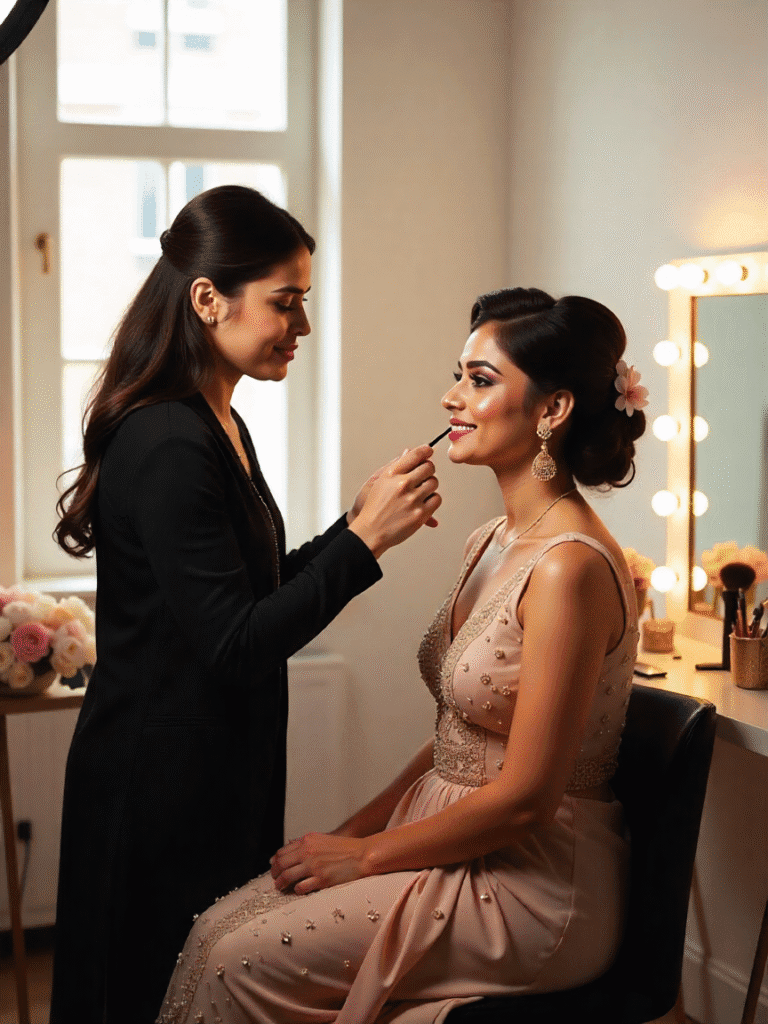
For a makeup artist, your portfolio isn’t just a collection of pretty faces — it’s your visual resume, your brand identity, and your strongest marketing tool.
No matter how talented you are, if your portfolio photos don’t do justice to your work, potential clients may never realize your true skill. A beautifully designed makeup look can look dull, washed-out, or even messy if it’s not photographed properly.
That’s why portfolio photography is not just about clicking pictures; it’s about storytelling, presentation, and professionalism.
In this blog, we’ll explore practical and realistic photography tips for makeup artists that will help you showcase your work in the best possible light — literally and figuratively.
1. Understand the Purpose of Your Portfolio
Before picking up a camera or phone, you must know what story you want your portfolio to tell.
Are you focusing on bridal makeup? Party looks? Editorial shoots? Or natural daily looks?
Each category demands a different style of photography.
Example:
- Bridal Portfolio: Soft lighting, luxurious backgrounds, jewelry focus.
- Editorial Portfolio: Bold contrasts, creative angles, high-fashion poses.
- Natural Look Portfolio: Simple lighting, clean backgrounds, close-up shots.
Having clarity helps you plan everything — from camera setup to model styling — and ensures your photos attract the right clients.
2. Use Natural Light Whenever Possible
Lighting is everything in makeup photography. Even the most perfect makeup can look dull under harsh or uneven lighting.
Best Practice:
- Always try to use soft natural light, especially during early morning or late afternoon (golden hours).
- Avoid direct sunlight — it creates harsh shadows and uneven tones.
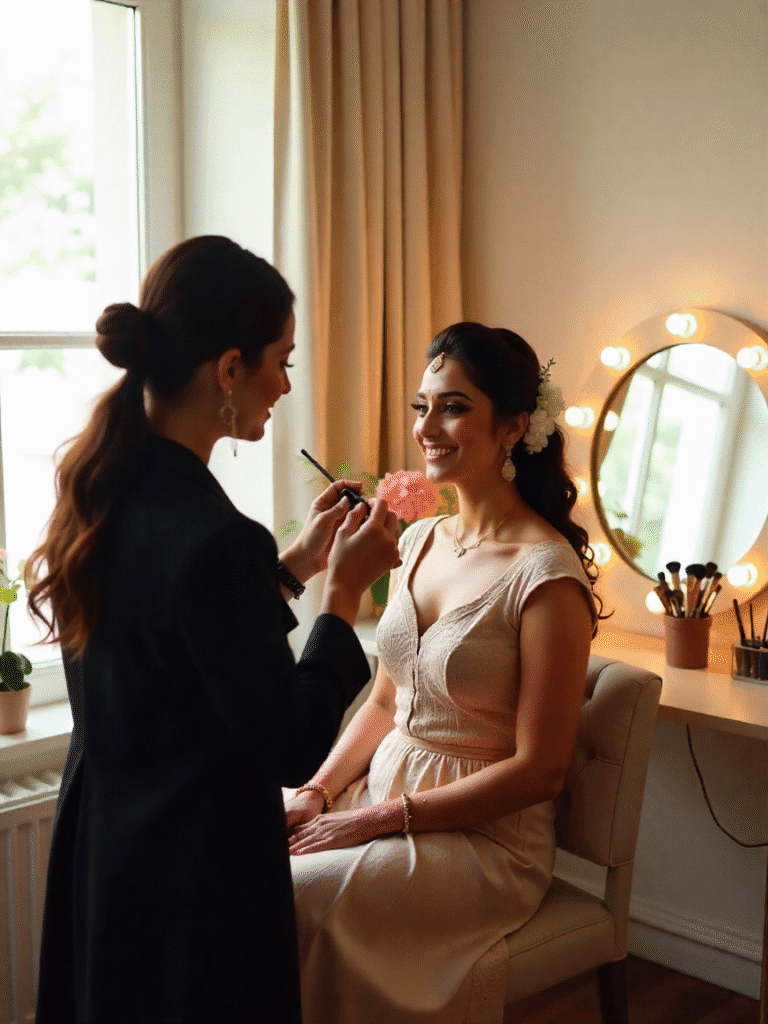
- Position the model near a window with a light curtain for diffused glow.
If natural light isn’t available, invest in a ring light or softbox setup to mimic natural brightness. Balanced lighting enhances skin texture, color tones, and product finish.
3. Focus on Clean Backgrounds
A clean background ensures the viewer’s attention stays on your makeup, not the clutter behind the model.
Tips:
- Use a plain white, beige, or pastel-colored background for most looks.
- Avoid patterns, posters, or messy walls.
- If shooting outdoors, choose minimal, aesthetic spots — like marble walls, greenery, or light wooden textures.
A tidy background subconsciously communicates professionalism and discipline.
4. Capture Different Angles
Many makeup artists only take one straight-on photo — which fails to show the detailing of their work.
Make sure you capture your model from multiple angles:
- Front view – for overall symmetry.
- Side view – to highlight contour, nose, and eye blending.
- Close-up view – to showcase eyes, lips, and skin texture.
Each angle tells a different story about your skill. Clients, especially brides, want to see how makeup looks in different perspectives and lighting conditions.
5. Always Use a Good Camera (Even if It’s Your Phone)
You don’t need a DSLR to create great portfolio photos. Today’s smartphones have excellent cameras — you just need to know how to use them.
Smartphone Photography Tips:
- Clean your camera lens before every shoot.
- Use portrait mode for natural background blur.
- Lock focus on the model’s eyes.
- Reduce exposure slightly to avoid over-bright skin tones.
If you can, use a tripod or stabilizer for sharp, steady shots.
6. Learn Basic Editing (But Avoid Over-Editing)
Editing is important to correct lighting, color, and framing — but over-editing can destroy authenticity. Brides and clients want to see real results, not airbrushed fantasy.
Use Editing Apps Like:
- Lightroom (for light and color correction)
- Snapseed (for quick touch-ups)
- Canva (for layout and watermark)
Keep skin texture real — remove only minor distractions like stray hair or background marks.
Pro Tip: Never smooth skin too much; it hides your real makeup skill.
7. Include Before-and-After Shots
Before-and-after images are gold for makeup artists. They visually demonstrate your transformation power.
How to Shoot Them:
- Use the same lighting and background for both shots.
- Keep expressions neutral (avoid smiling in one and serious in another).
- Align the model’s face position for easy comparison.
Such photos attract instant attention and perform very well on Instagram, websites, and ads.
8. Showcase Variety in Your Portfolio
Clients want to see versatility. If all your photos look the same — same hairstyle, same pose, same background — your portfolio can look repetitive.
Add Variety:
- Include different skin tones and face shapes.
- Show traditional, modern, and soft glam looks.
- Mix studio and outdoor shoots.
- Feature real brides and models.
The more diversity your portfolio shows, the wider audience it attracts.
9. Collaborate with Photographers and Models
If you want professional-grade photos, collaborate with photographers and models in your area.
Benefits:
- Photographers bring expertise in lighting and framing.
- Models know how to pose naturally.
- You get professional-quality photos for your portfolio.
It’s a win-win situation — photographers get content, and you get stunning visuals.
If you can’t afford professionals initially, collaborate for barter — both parties get portfolio material.
10. Pay Attention to Details
Details make or break a makeup photo. Small things like unblended foundation, flyaway hairs, or uneven lipstick lines become very visible in high-resolution photos.
Before Clicking:
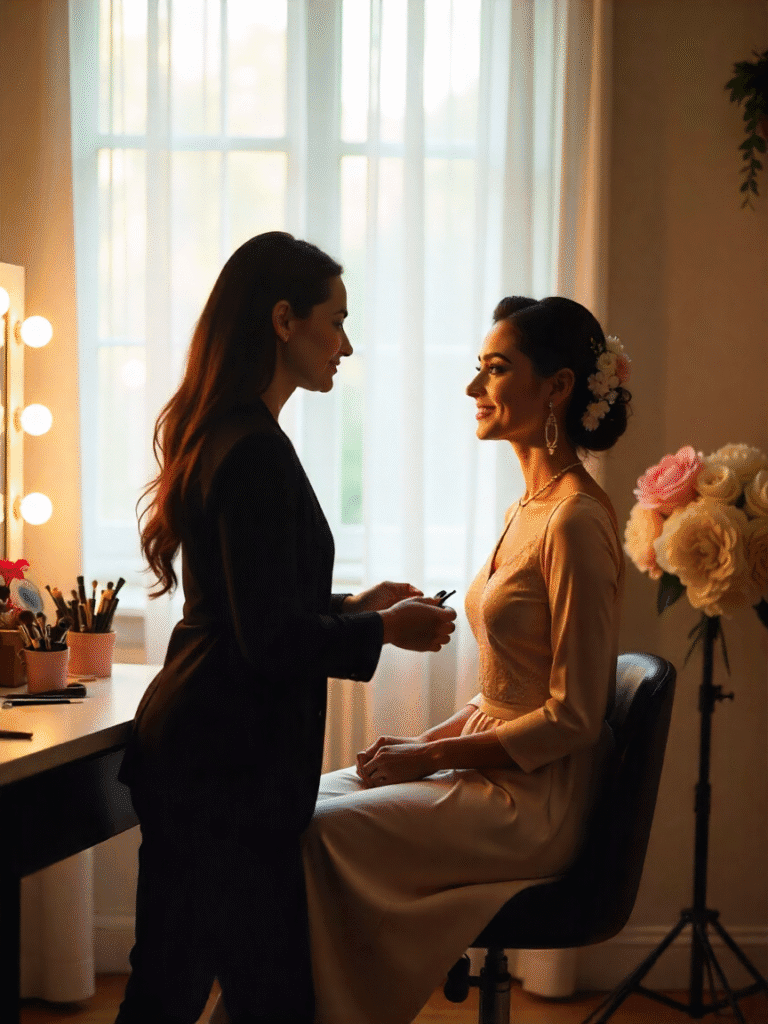
- Double-check everything — foundation line, lashes, jewelry placement.
- Wipe any smudges near the eyes or lips.
- Check the outfit is clean and wrinkle-free.
Attention to detail shows you care about quality — and that reflects directly in your professional reputation.
11. Add Human Emotions
While clean, professional shots are essential, don’t forget to add emotion. A smiling bride, a confident expression, or a happy moment before the wedding — these human touches make your portfolio more relatable and warm.
Clients connect emotionally with expressive photos, not just perfect makeup.
12. Maintain Consistent Editing Style
Consistency is key. When someone scrolls through your Instagram or website, your photos should look like they belong to one brand — yours.
Choose one consistent editing tone or color theme — for example:
- Soft pastel filter for bridal looks.
- Warm golden tones for traditional themes.
- Cool tones for modern glam.
Consistency creates brand identity and makes your portfolio instantly recognizable.
13. Add Branding and Watermark
Adding a small, elegant watermark with your logo helps protect your photos and promotes your name whenever they’re shared online.
Do’s and Don’ts:
Keep it minimal and semi-transparent.
Place it in a corner, not across the face.
Don’t use loud or colorful fonts that distract from the image.
Your watermark should enhance your brand presence, not dominate your art.
14. Organize and Update Regularly
A strong portfolio is never static. Keep updating it every few months with your latest and best work.
Steps to Maintain It:
- Remove outdated or low-quality images.
- Add your best 20–30 photos only (quality > quantity).
- Categorize by themes — bridal, engagement, party, editorial.
- Backup your photos on Google Drive or hard disk.
An up-to-date portfolio shows growth and professionalism — clients feel you’re active and relevant.
15. Optimize Portfolio for Online Platforms
Your portfolio should look perfect both on mobile and desktop.
Checklist:
- Compress images (to load fast).
- Use descriptive file names (e.g., bridal-makeup-portfolio-lyrabeauty.jpg).
- Add SEO-friendly alt text for each image.
- Create short captions explaining the look (e.g., “Soft glam bridal look for daytime wedding”).
This improves your Google ranking and helps new brides discover you online.
Conclusion
A great makeup portfolio is your silent salesperson — it speaks before you do. It shows your talent, attention to detail, and aesthetic sense.
By following these photography tips — from lighting and angles to editing and presentation — you can transform your portfolio into a professional showcase that attracts dream clients.
Remember: Makeup is your art, but photography is your voice.
Make sure both speak beautifully.
