
How to Prep Dry Skin Before Makeup: Complete Guide for Flawless and Hydrated Skin

Dry skin can make makeup application challenging. Without proper preparation, foundation may appear patchy, concealer can settle into fine lines, and blush or highlighter may not blend well. Prepping dry skin ensures a smooth, radiant, and long-lasting makeup finish.
This guide provides a step-by-step routine, including cleansing, exfoliating, moisturizing, priming, foundation tips, concealer, blush, and final finishing, along with professional tips, diet suggestions, and DIY treatments.
1. Understand Your Skin: Why It Matters for Dry Skin Makeup Prep
Before you start any routine, understanding your skin type is crucial. Dry skin is characterized by:
- Flaky patches that can make makeup cling unevenly.
- Tight or rough texture due to lack of natural oils.
- Dullness or lack of natural glow, which can make makeup look flat.
Challenges During Makeup on Dry Skin
- Foundation looks cakey if skin is dehydrated.
- Concealer may crease, settling into fine lines.
- Blush and highlighter may appear patchy instead of seamless.
Knowing these helps you choose the right products and techniques, ensuring a flawless finish.
2. Start With Gentle Cleansing: The First Step to Smooth Skin
Cleansing is the first and most important step. It removes dirt, oil, and impurities without stripping skin moisture.
How to Cleanse Dry Skin
- Use hydrating or cream-based cleansers, not foaming gels.
- Avoid hot water; lukewarm water preserves natural oils.
- Pat your face dry gently with a soft towel.
Extra Tip: Cleansing should leave your skin soft and nourished, not tight or stripped.
3. Exfoliation: Smooth the Surface
Exfoliation removes dead skin cells, smooths rough texture, and prepares skin for makeup.
How Often?
- 1–2 times per week for dry skin.
- Avoid over-exfoliating, as it increases sensitivity.
Best Options
- Chemical exfoliants: Lactic acid or glycolic acid for gentle exfoliation.
- Physical exfoliants: Soft, fine-grain scrubs, avoiding harsh abrasive particles.
Pro Tip: Don’t exfoliate the day of your makeup. Best results come 1–2 days prior, giving skin time to recover.
4. Hydrating Toners and Facial Mists
Hydration is key for dry skin. After cleansing, balance pH and prepare your skin for the next steps.
- Use toners containing hyaluronic acid, rose water, or glycerin.
- Facial mists provide a refreshing boost before primer or during long makeup sessions.
Tip: Keep a hydrating mist handy for touch-ups during the day, especially in air-conditioned or dry environments.
5. Moisturizing: The Heart of Dry Skin Prep
Moisturizer ensures skin is plump, soft, and ready for foundation.
Choosing the Right Moisturizer
- Ingredients like ceramides, shea butter, squalane, and hyaluronic acid are excellent for hydration.
- Creamy textures work better than lightweight gels for dry skin.
Application Tips
- Apply in upward strokes, covering all dry areas.
- For extremely dry areas (cheeks, under eyes), layer a hydrating cream or eye cream.
- Let moisturizer absorb 2–3 minutes before moving to primer.
6. Using a Hydrating Primer
Primer creates a smooth canvas and improves makeup longevity.
- Hydrating or illuminating primers prevent foundation from clinging to dry patches.
- Focus on areas prone to dryness or fine lines.
- A light layer ensures even foundation application and natural glow.
Expert Tip: Some primers contain hyaluronic acid or glycerin, giving extra hydration and a dewy finish.
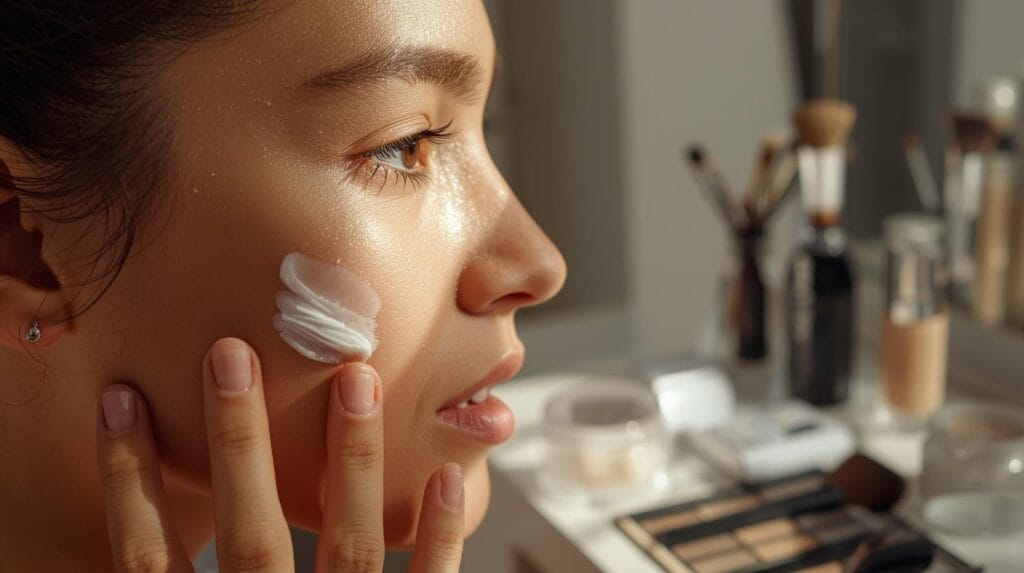
7. Foundation Tips for Dry Skin
Foundation choice and application technique dramatically affect dry skin.
Choosing Foundation
- Dewy, liquid, or cream foundations are ideal.
- Avoid powder-heavy or matte formulas that accentuate dryness.
Application Techniques
- Use a damp beauty sponge or foundation brush for seamless blending.
- Avoid layering too much foundation; it can highlight dry patches.
Pro Tip: Mix a few drops of facial oil or hydrating serum with your foundation for added luminosity.
8. Concealer Application
- Choose creamy concealers over matte ones.
- Apply sparingly and blend gently with a damp sponge.
- Set lightly with translucent powder only on slightly oily areas.
Tip: Over-powdering can make dry areas look flaky and uneven.
9. Blush, Bronzer, and Highlighter
Cream or liquid formulas work best for dry skin.
- Cream blush blends naturally and avoids patchiness.
- Liquid highlighter gives a radiant glow without emphasizing dry spots.
- Blend well using fingers or a damp sponge.
10. Setting and Finishing
- Avoid heavy powders.
- Use a light mist setting spray to lock makeup and maintain hydration.
- Keep a hydrating facial mist for touch-ups throughout the day.
11. Night Prep for Dry Skin
Healthy makeup starts with healthy skin.
- Remove makeup completely with a gentle cleanser.
- Apply a rich night cream or facial oil.
- Use hydrating masks 1–2 times a week.
- Drink water and maintain a balanced diet for long-term skin health.
12. DIY Treatments and Masks for Dry Skin
Adding homemade masks once or twice a week helps hydrate and nourish skin naturally.
- Honey + Yogurt Mask: Moisturizes and soothes dry patches.
- Aloe Vera Gel: Hydrates and calms irritation.
- Avocado + Olive Oil: Rich in fatty acids, perfect for extra hydration.
Tip: Always patch test new ingredients to avoid reactions.
13. Common Mistakes to Avoid
- Using matte foundations or powder-heavy formulas.
- Skipping moisturizer or primer.
- Over-exfoliating before makeup.
- Applying makeup on flaky or irritated skin.
14. Pro Tips from Makeup Artists
- Always prep skin 15–20 minutes before makeup, allowing products to absorb.
- Layer lightweight products gradually for a natural glow.
- Choose tools like damp sponges, soft brushes, and fingertips for cream products.
- Avoid excessive rubbing; it can irritate dry skin.
15. Diet and Lifestyle for Healthy Skin
- Hydrate: 2–3 liters of water daily.
- Protein: Eggs, lentils, paneer, and fish support skin repair.
- Omega-3 Fatty Acids: Walnuts, flaxseeds, and fish for hydration.
- Vitamins & Minerals: Fruits, vegetables, and nuts improve skin texture.
Tip: Avoid excessive caffeine, alcohol, and fried foods; they dehydrate skin.
16. Long-Term Dry Skin Care
- Continue hydrating skincare routines daily.
- Trim dead skin with gentle exfoliation weekly.
- Use protective serums or oils before harsh weather or air conditioning.
- Maintain healthy sleep and reduce stress for glowing skin.
17. Makeup Removal and Recovery
- Remove makeup gently using micellar water or cream cleansers.
- Follow with a hydrating toner and night cream.
- Consider weekly hydrating facials for long-term skin health.
Final Thoughts
Prepping dry skin is essential for flawless, radiant makeup. A complete routine of cleansing, exfoliating, moisturizing, priming, and using hydrating formulas ensures a smooth, long-lasting finish.
Healthy, nourished skin makes makeup easier to apply, more natural-looking, and radiant. Whether for daily wear or special occasions, investing time in your skincare before makeup yields beautiful, glowing results.